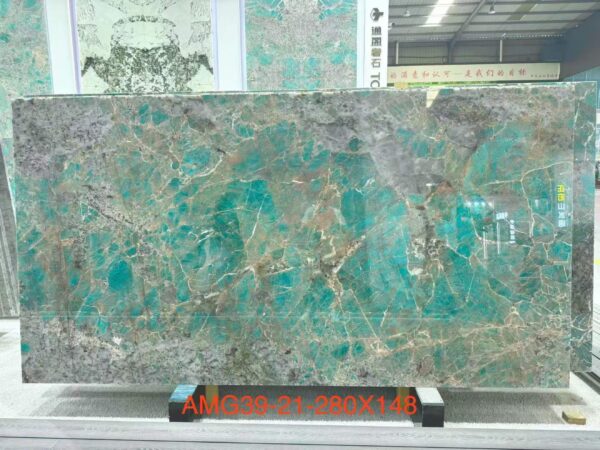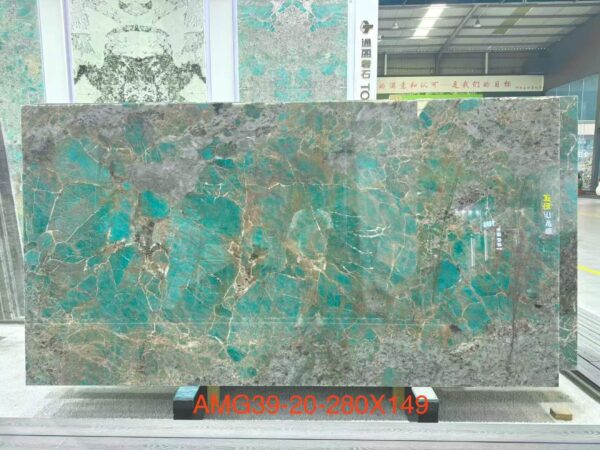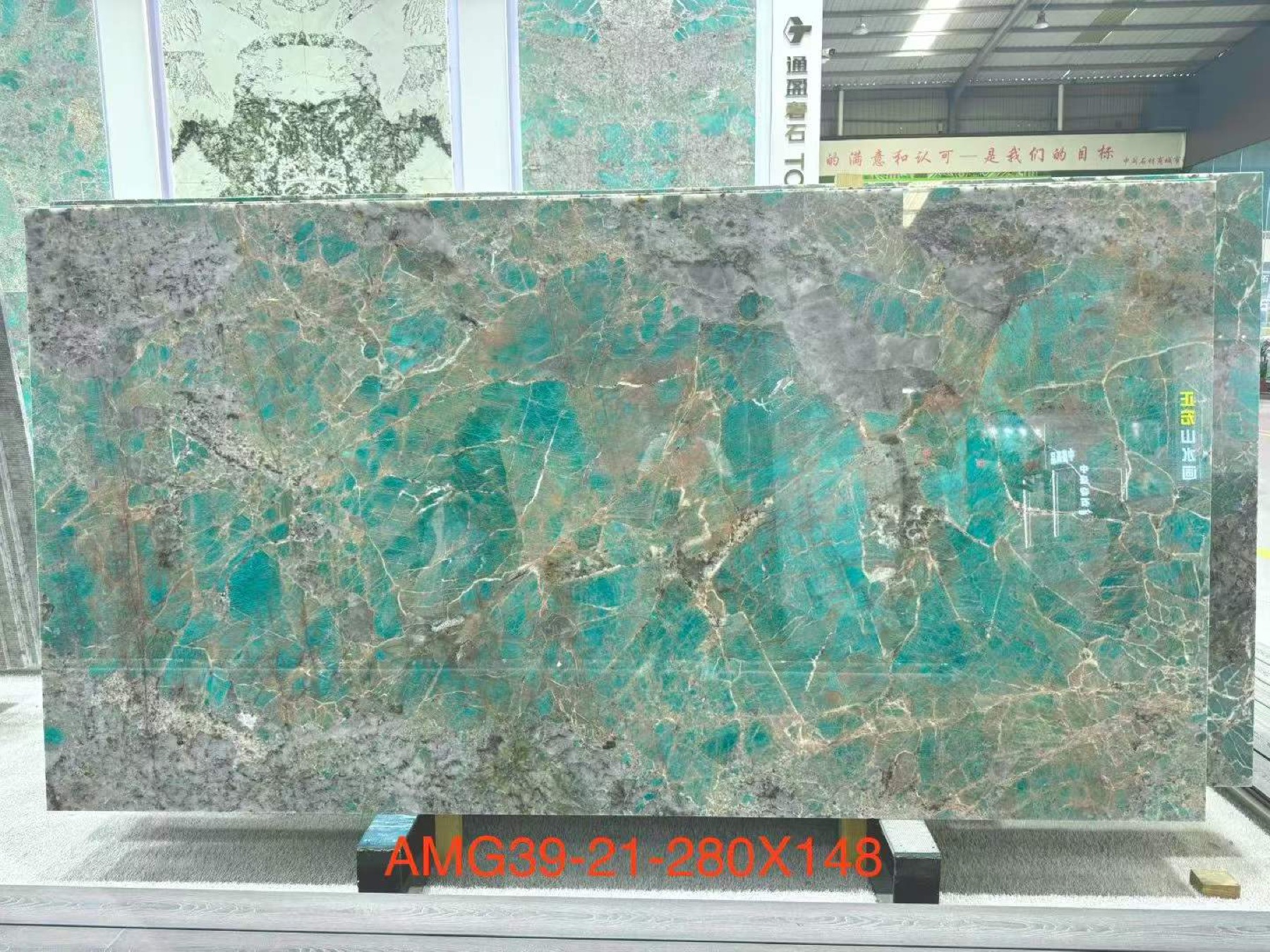
T Amazonite Quartzite
Core Sourcing Agent for Amazonite Quartzite

Amazonite Quartzite

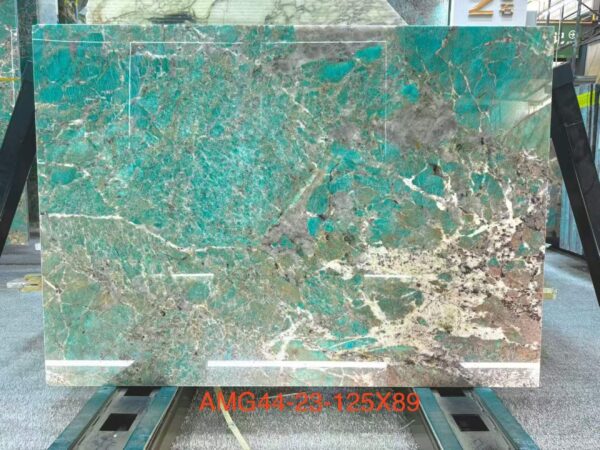
A Brazilian blue-green quartzite that reads as a statement surface rather than a background one. We buy <strong>Amazonite Quartzite</strong> by the lot, hold slabs at each grade, and match the veining across a run before anything is cut — then ship from whichever Chinese port serves your lane. One stone, and we control the whole path it takes to reach you.

The colour
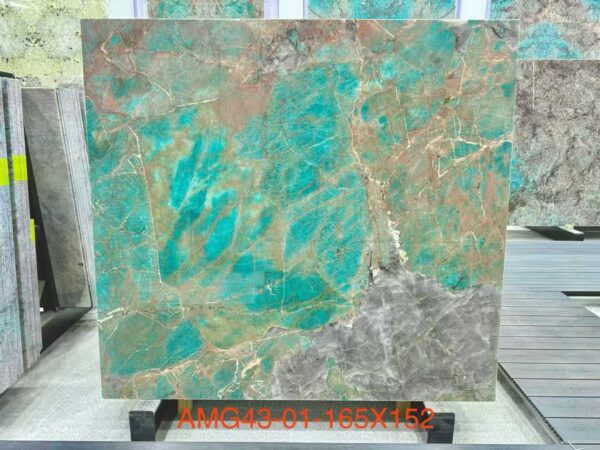
Turquoise, teal and emerald green with white or charcoal veining
Every slab
Unique movement — matched to your run, not swapped in later
CAD / BIM / 3ds
Book-match planned before the saw
Your port
Xiamen, Quanzhou, Ningbo or Shanghai — freight compared
Before you order

Four things about this stone specifically. None of them apply to a warm white quartzite, and that is the point — they are what you are buying when you buy this one.
Lot, not container

We sell lots, and two lots are not the same colour

Amazonite Quartzite comes from a restricted deposit, so we buy the lot and quote the lot. Two slabs from different lots can be visibly different in the depth of the turquoise and in the direction of the movement — both are correctly described as Amazonite Quartzite, and they still will not sit together on one wall. We send you the matched run, photographed side by side, before anything is cut. This stone is not bought by the square metre and it is not held in standing stock.

The movement

The veining is the reason you are looking at it

Buyers often ask us to remove the banding. We do not, because it is a geological feature of the stone rather than a flaw, and a slab with no movement in it is not this material. What we do is match the movement across a run so the veining flows across the whole surface. On a mitred waterfall the mitre shows two faces at once, which is why this stone is bought for that application rather than for a plain counter.

Polish changes the colour

The same slab reads as a different stone polished and honed

A high polish takes the turquoise and teal to their full depth and sharpens the veining; honed, the same slab goes soft and matte and shows fewer fingerprints. Neither is the correct finish — it depends on where the surface is and how warmly the room is lit. Tell us the location and the light, and we will tell you which one we would cut. Sample in person where you can: a photograph of a polished slab and a photograph of a honed one of the same stone are two different stones.

Care

Sealing annually is routine, not a repair

The stone is dense and low-porosity, which is why it resists staining and does not etch the way marble does. It still gets sealed once a year as ordinary maintenance. Clean with warm water and a mild, pH-neutral detergent, and avoid acidic or abrasive cleaners. If a slab is showing water marks, that is a sealing interval that has run out, not a defect in the stone.